Exercise physiology for every life stage — measured, not generic.
Women's health deserves better than pink dumbbells and general advice. Our senior EPs bring particular depth across the conditions and life stages that change how your body responds to exercise — and every program is built on objective testing, so you know what's working.
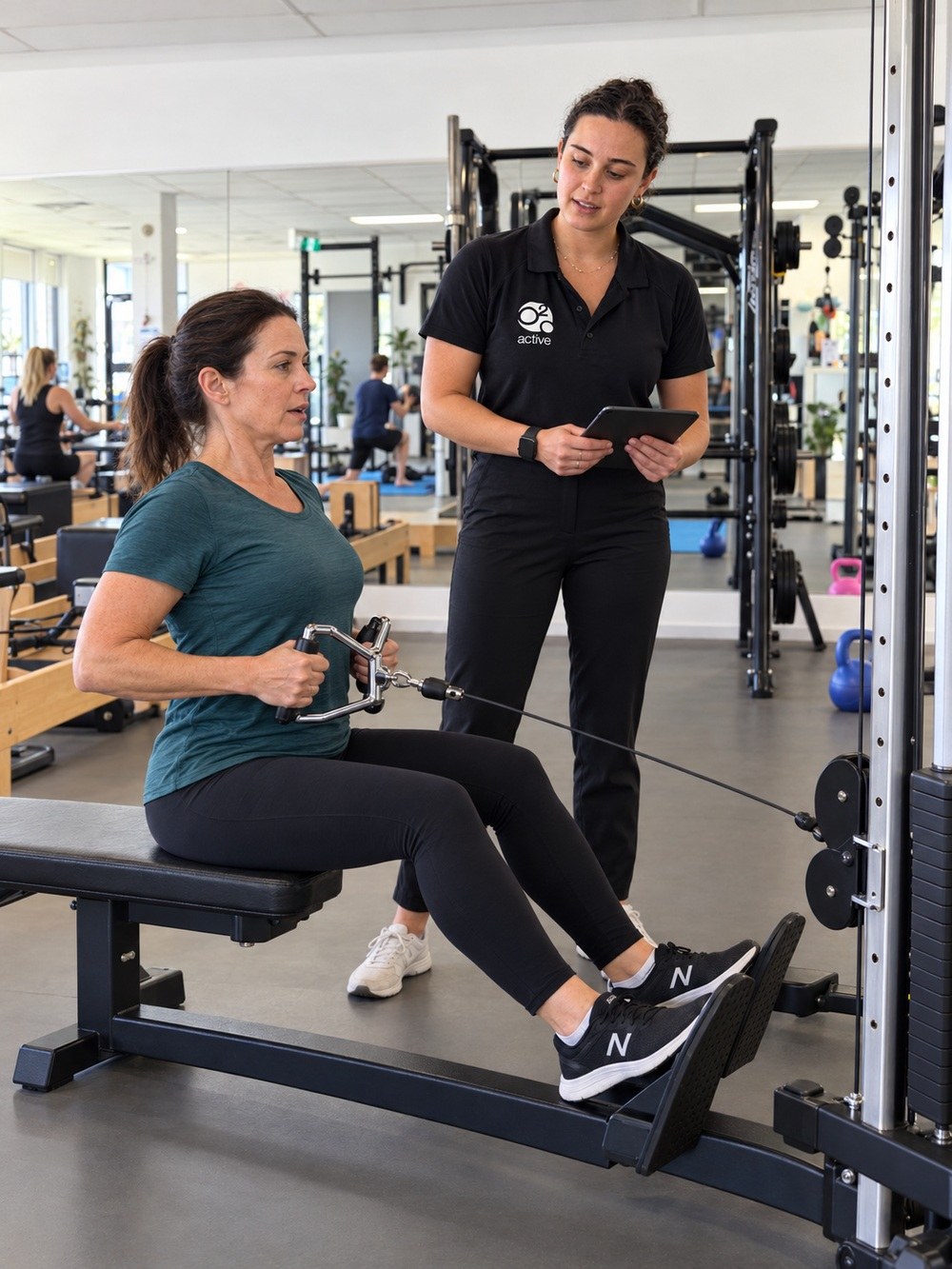
The years around menopause drive real, measurable change: oestrogen withdrawal accelerates the loss of muscle and bone, fat shifts towards the abdomen, cardiovascular risk rises sharply after menopause, and sleep, mood and resting fuel use often change with it. The window for intervention is wide, and the response to properly prescribed training is strong — which is why we measure before we prescribe.
At your assessment we record where you are in the transition and any menopausal hormone therapy you use, because both change how results are read. Hormone decisions stay with your GP or specialist; we share the findings that matter to them.

Grip strength against age and sex norms and segmental lean mass on the InBody are our early screen for muscle loss; where a DEXA is arranged through your GP, its appendicular lean mass index refines the picture.
Bone density comes from a DEXA arranged through your doctor, who interprets it. We use it to set what loading and impact is appropriate, and to track the trajectory alongside your strength numbers.
An InBody estimate of fat, muscle and visceral fat, repeated under the same conditions every 12 weeks so the trend — not the scales — tells the story.
A sub-maximal fitness test or VO₂ Peak test, selected after screening, because fitness is one of the strongest markers of long-term health and cardiovascular risk climbs after menopause.
ECAL resting metabolic testing estimates your resting energy use and the mix of fat and carbohydrate you burn at rest — a reading that often shifts in perimenopause and guides how we build your aerobic base.
Force-plate power and reactive strength where appropriate, plus single-leg balance and sit-to-stand — the measures most tied to staying independent and upright later.
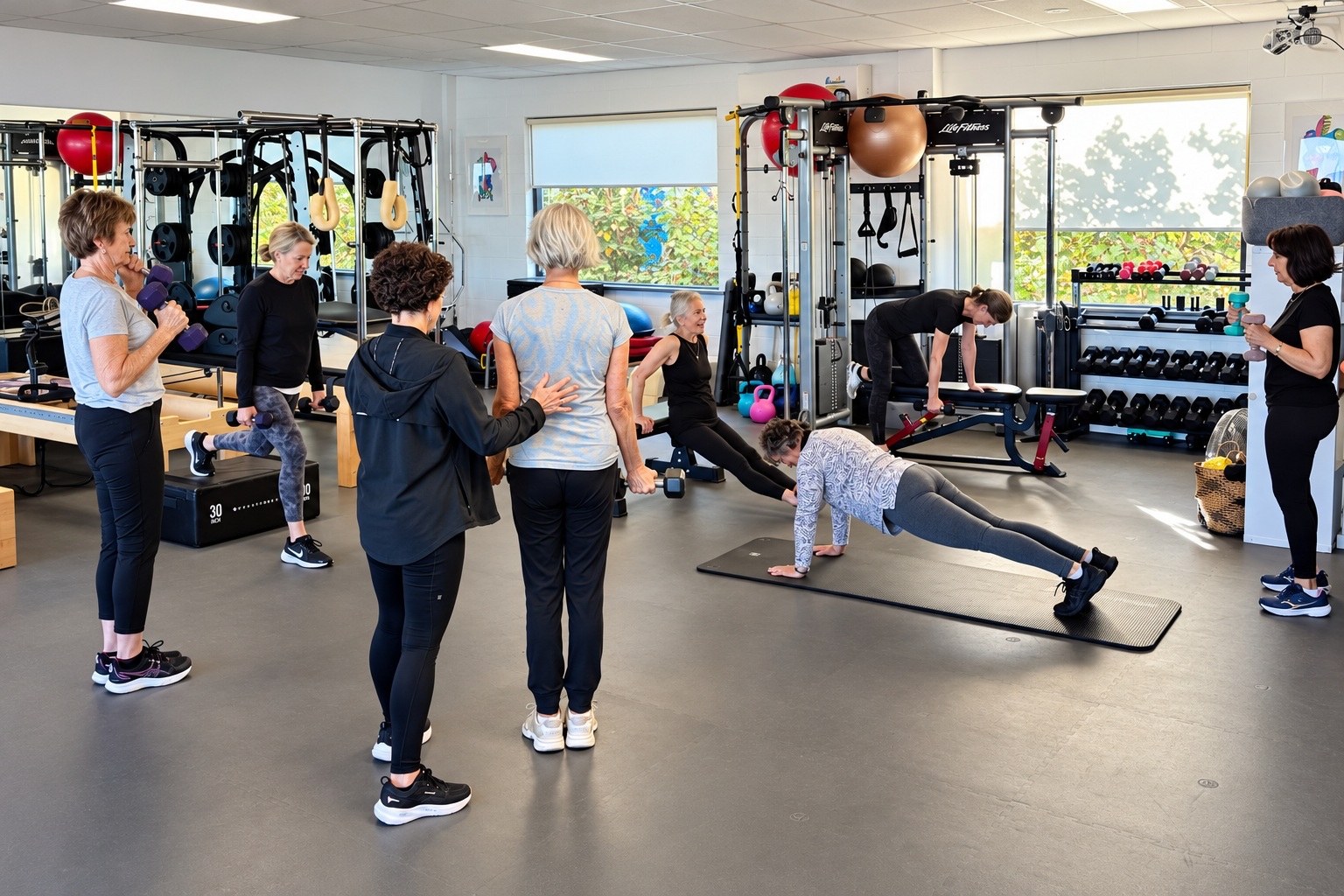
Resistance training comes first: compound lifts, progressed under supervision, around three times a week, because it is the most powerful counter to the muscle and bone loss that oestrogen withdrawal accelerates. Power and impact work — step-ups, hops, fast-tempo squats — are added where your bone density allows, scaled to your capacity. An aerobic base at a conversational intensity, with intervals as your capacity grows, supports cardiometabolic risk, body composition and mood. Where your resting fuel use is carbohydrate-dominant, the aerobic base is built at lower intensities first.
Protein adequacy, sleep and stress are the levers most people underrate in perimenopause; we cover them in plain terms within our scope and refer to our dietitian network when individual nutrition care is needed. Everything is re-tested at 12 weeks and the next block is built on what moved. Many women train this way in our Strong Women class or Strength & Osteo Level 1, after an initial assessment.

In the first and second trimesters testing is sub-maximal only — a sub-maximal fitness test rather than VO₂ testing, no breath-holding under load, no force-plate jumping and no lying flat after 16 weeks. In the third trimester we keep to grip strength, a modified sit-to-stand and walking-based assessment, and defer anything non-essential until after birth. Postnatally, a pelvic floor screen comes before any return to loading or impact, and the program rebuilds from there.
Every client entering a strength class or a heavy-lifting program completes a pelvic floor screen first. If you have symptoms and haven't been assessed, we refer you to a pelvic health physiotherapist before loading. Heavy lifting isn't off the table — with breath and pelvic floor coordination cued correctly it's well tolerated — but while symptoms are active we hold back high-impact jumping, heavy overhead pressing with breath-holding and double-leg drop landings.
Current evidence points to a weekly exercise dose of roughly 480–1,000 MET-minutes, with the mode chosen by target: aerobic work for waist-to-hip ratio and resting blood pressure, mind-body sessions where insulin sensitivity is the priority, and higher-intensity intervals where tolerated. We re-measure waist-to-hip ratio and blood pressure at 12 weeks; glucose, insulin and lipid interpretation stays with your doctor.
Testing waits at least 6 weeks after surgery and follows your surgeon's clearance. Where there is lymphoedema risk after breast surgery, grip is tested on the unaffected side only and upper-limb loading is progressed with that in mind. Programs during and after treatment follow our exercise oncology protocol.
Endometriosis programs are paced to symptoms and coordinated with your gynaecologist. For osteoporosis and osteopenia, see our bone health program. Individual results vary.
It starts with an Initial Assessment — Exercise Physiology, from $150 (around 60 minutes): your history and goals, the baseline tests above, and a plan explained in plain English. Metabolic testing (ECAL + InBody, $185) is a separate appointment. From there: 1:1 sessions with a senior EP, EP Pairs, or clinical classes including Strong Women and Strength & Osteo; scheduled re-testing; and clinician-ready reporting to your GP or specialist when a finding matters. Medicare (with a GP Chronic Condition Management Plan), DVA and private health rebates may apply, depending on your circumstances.
Book an assessment, or refer a patient for objective baseline data.
