Rebuild capacity on measured deficits — supervised, progressively loaded, and reported back to your treating team.
Rehabilitation usually stalls at the same point: symptoms have settled, but nobody has measured what capacity was lost or rebuilt it with real load. That gap is where we work. We test strength, power, left–right balance and function, build a supervised program on the deficits the data shows, and re-test so you and your treating team can see the change — not guess at it.
Anyone whose body has been limited by an injury, an operation or persistent pain and wants to get back to full capacity: returning after a musculoskeletal injury; rebuilding after surgery such as a joint replacement, ligament reconstruction, shoulder repair or spinal procedure once your surgeon has cleared you; training around a back, hip or knee that keeps flaring; returning to sport or to physical work; or rebuilding strength and confidence after a fall, an illness or a long lay-off. Programs run 1:1, in EP Pairs or in our supervised classes, depending on where you're at. For hip and knee osteoarthritis we also run GLA:D®, the licensed education and exercise program — see our classes.
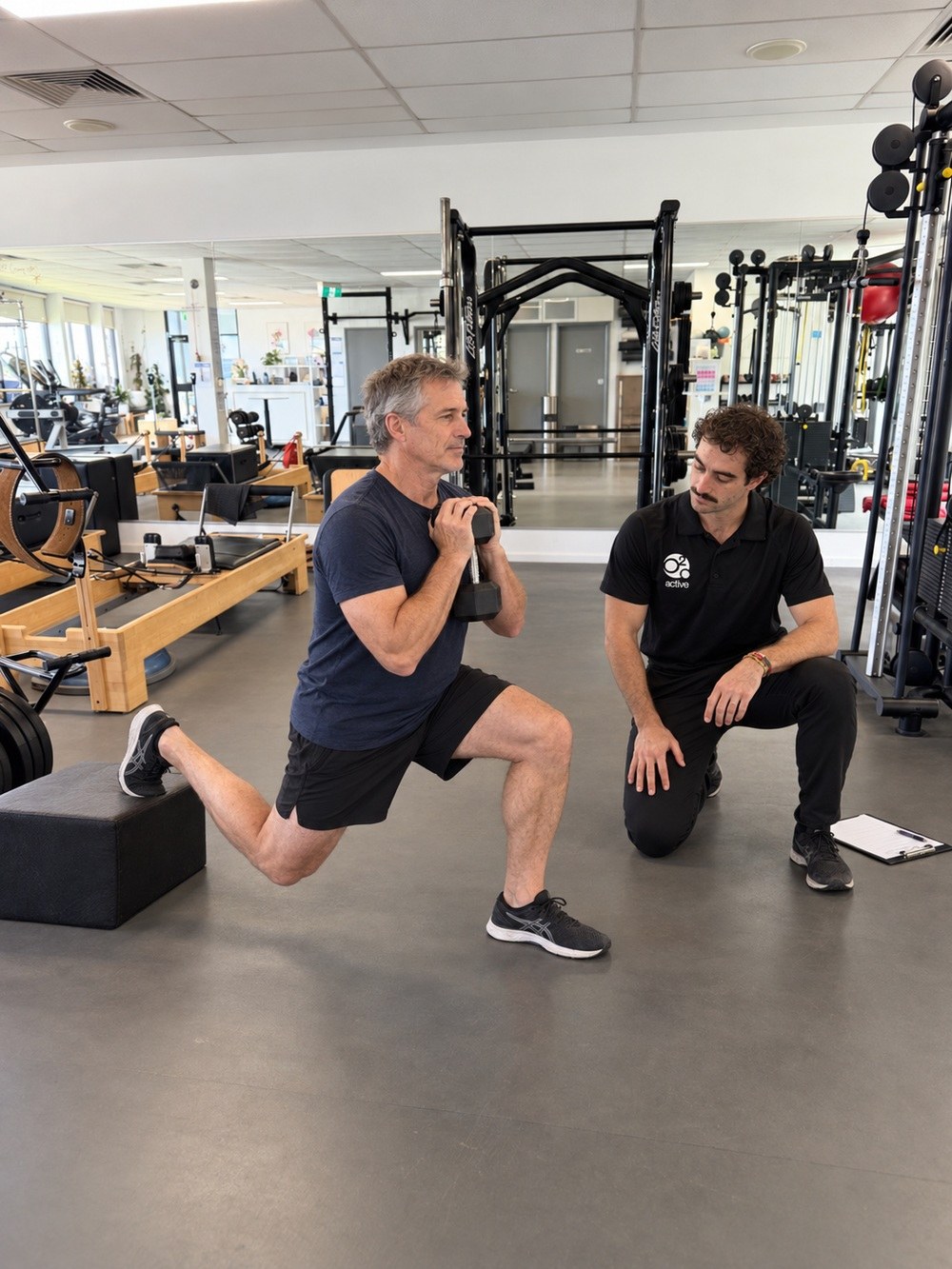
Every test is chosen for your stage of recovery — isometric options where jumping or heavy loading isn't appropriate yet, and nothing is forced. Your Accredited Exercise Physiologist selects the battery after a screening and, where you've had surgery, with your surgeon's written clearance on file.
VALD ForceDecks measure peak force, rate of force development and left–right asymmetry from jump and isometric tests. An asymmetry above 10% is the flag that drives unilateral work on the weaker side.
Grip strength against age and sex norms, and your working loads on the key patterns — hinge, squat, push, pull. Predicted maximums come from sub-maximal sets with validated formulae; we never test a true one-rep max.
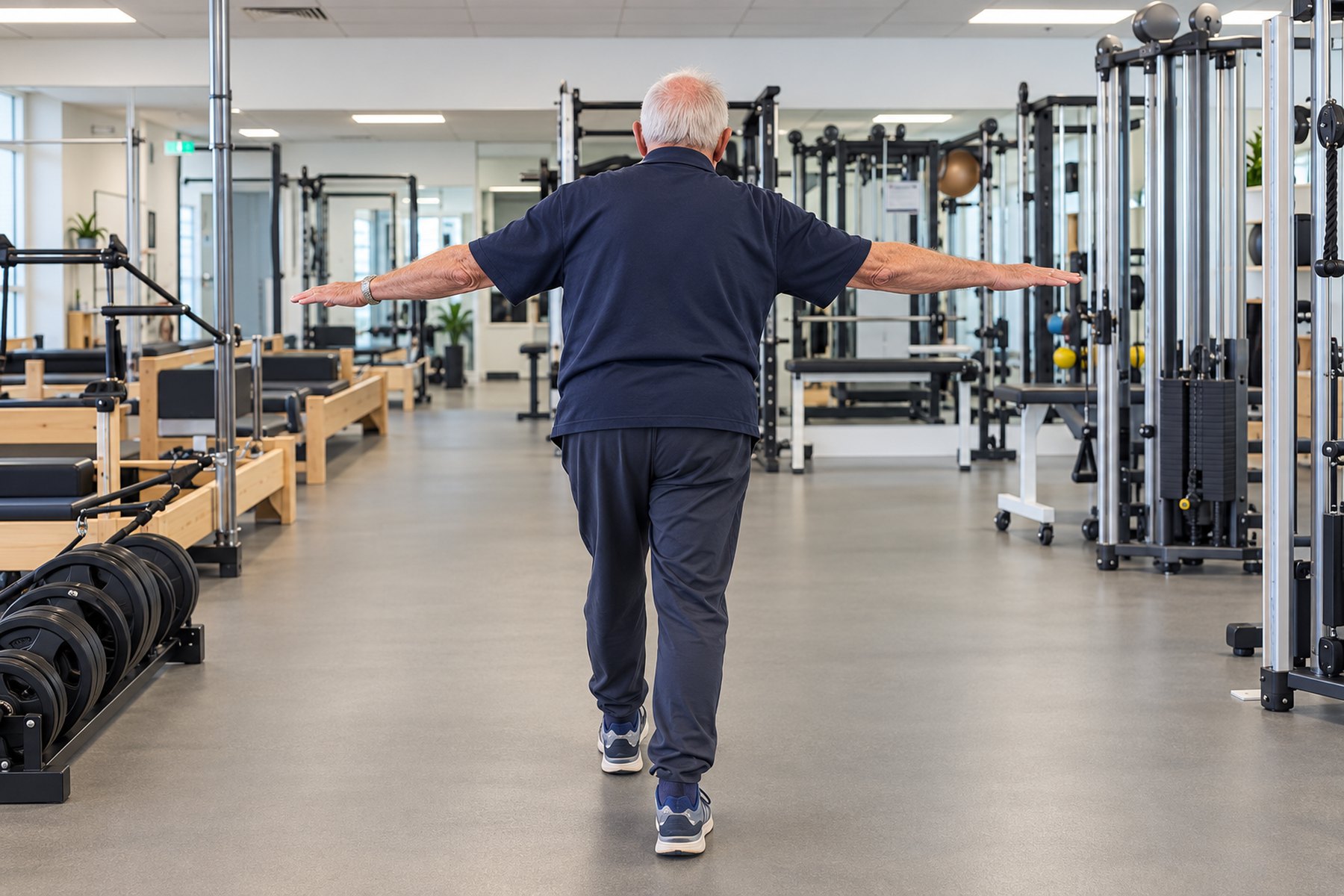
A 30-second sit-to-stand, timed up-and-go and single-leg balance give the functional baseline; filmed gait and movement screening show the compensations that load the wrong tissue.
An InBody scan estimates lean mass limb by limb, so wasting on an injured side is tracked as a trend across the program — not read from the scales.
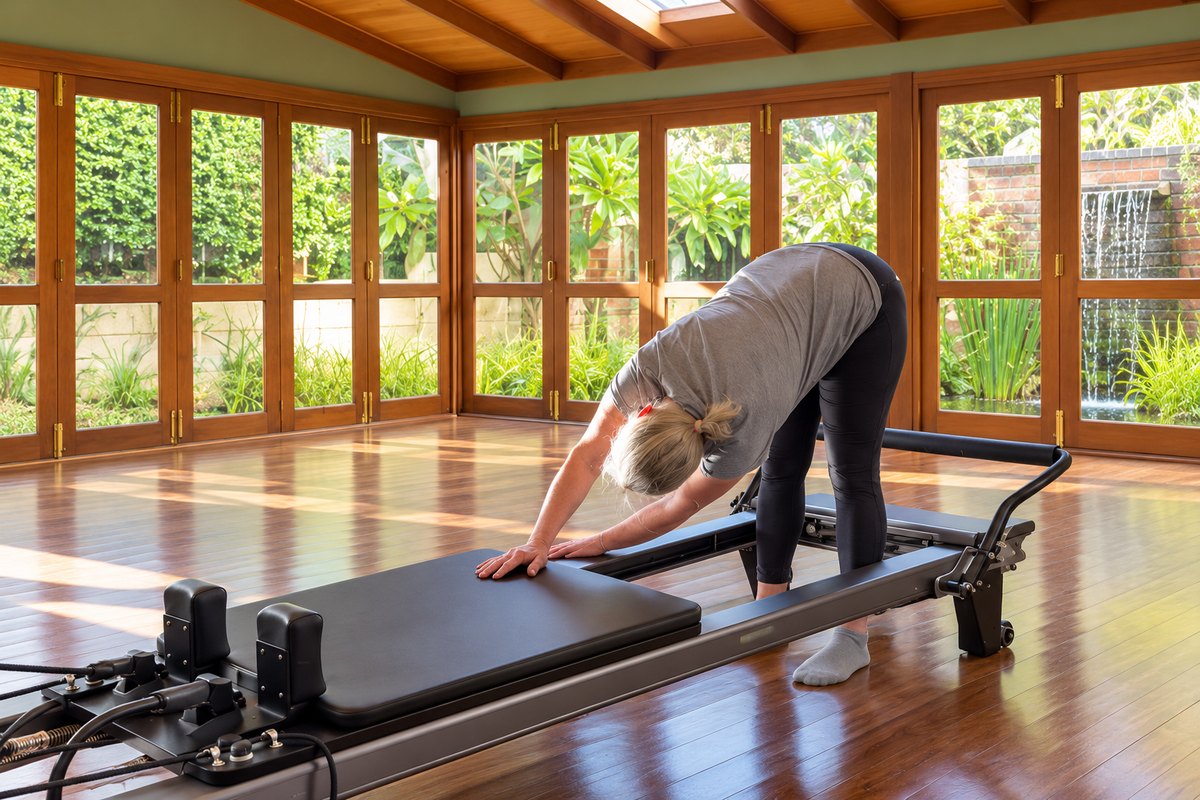
Joint range measured, not eyeballed, with the overhead ceiling, squat depth and any restrictions written into your plan so every session loads what's safe to load.
The same tests, the same way, at the end of each block. Progress is reported to your GP, surgeon or physio in plain English, with the numbers alongside.
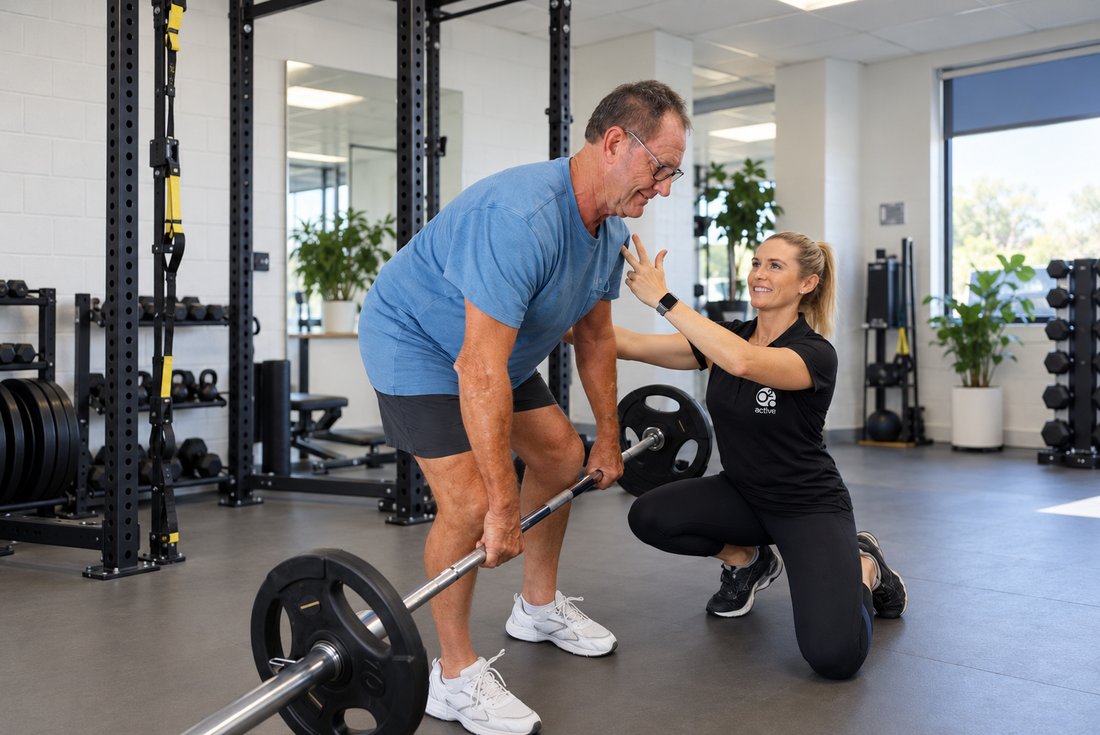
Loading is what rebuilds tissue tolerance, and it's also what people are most afraid of after an injury. Our clinical rules keep it safe: pain during a set stays at or below 4 out of 10 and settles within 24 hours; when a joint is irritable we modify the range before we take away the load; every exercise has written progression and regression criteria; and nobody loads heavy in their first sessions before technique is established.
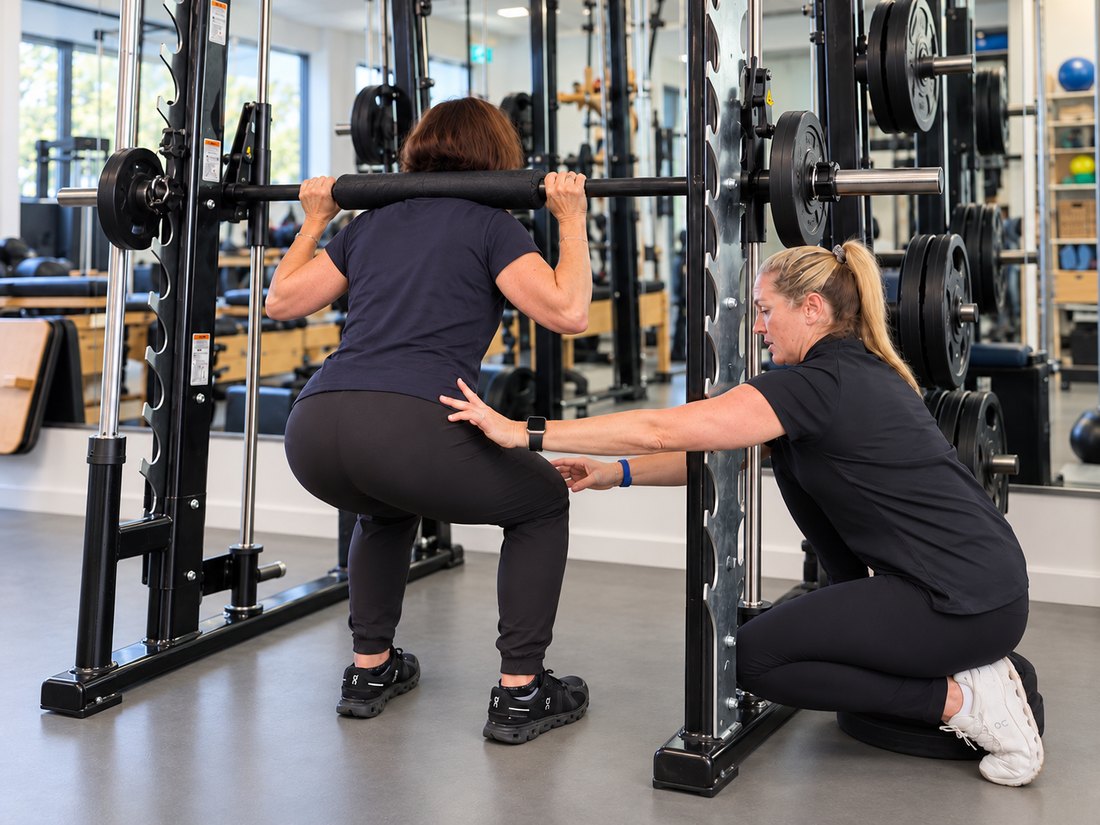
Where the force plates show a side doing less of the work, the program targets it directly — split squats, single-leg hinges, step-ups — for an 8–12 week block before re-testing. Where power has dropped, we rebuild it at the tempo and intensity that's right for your age and stage. Every working set on the main lifts is coached by an exercise physiologist.
History, goals, screening and any surgical restrictions, then the baseline tests that suit your stage. Around 60 minutes.
Your numbers in plain English, the two or three deficits that matter most, and the plan to shift them.
Supervised, progressively loaded sessions — 1:1, EP Pairs or clinical classes — with every working set coached.
Re-test at 8–12 weeks, a report to your treating team, and the next block built on what moved.
Rehabilitation works best when everyone is reading the same numbers. With your consent, your surgeon, physiotherapist and GP receive a short report after your baseline and at each re-test, so milestones such as returning to running, lifting or sport are decided on measurement rather than on how a session felt. Return-to-sport and return-to-work decisions stay with your treating doctor or surgeon; our role is to give them objective data and to deliver the loading that gets you there.
For clients who need hands-on physiotherapy alongside their rehab, our affiliate clinic Eric Street Physio in Cottesloe works closely with our EP team — shared clients move between the two with nothing lost in translation.
The same measured approach runs our workers' compensation program: a functional baseline against the physical demands of your role, supervised capacity-building, and objective reports that give your doctor, case manager and insurer something defensible to act on. We work within WorkCover WA and self-insurer arrangements and alongside your approved workplace rehabilitation provider.
Rehabilitation starts with an Initial Assessment — Exercise Physiology, from $150 (around 60 minutes). Follow-up sessions are priced by format — 1:1, EP Pairs or clinical classes. Medicare (with a GP Chronic Condition Management Plan), DVA, workers' compensation and private health rebates may apply, depending on your circumstances and cover — just ask.
Book an assessment, or refer a patient for an objective baseline and a measured rehabilitation plan.
