Strength, fitness and the numbers behind them — measured, prescribed and trained alongside other men.
Most men we see are not sick. They are 45 to 75, busier than they would like, carrying a few more kilos around the middle than they used to, and aware that the strength and stamina they relied on is quietly going. Some arrive with a GP letter about blood pressure, cholesterol or blood sugar; others arrive after a mate's heart event. Either way, the question is the same: where am I actually at, and what do I do about it?
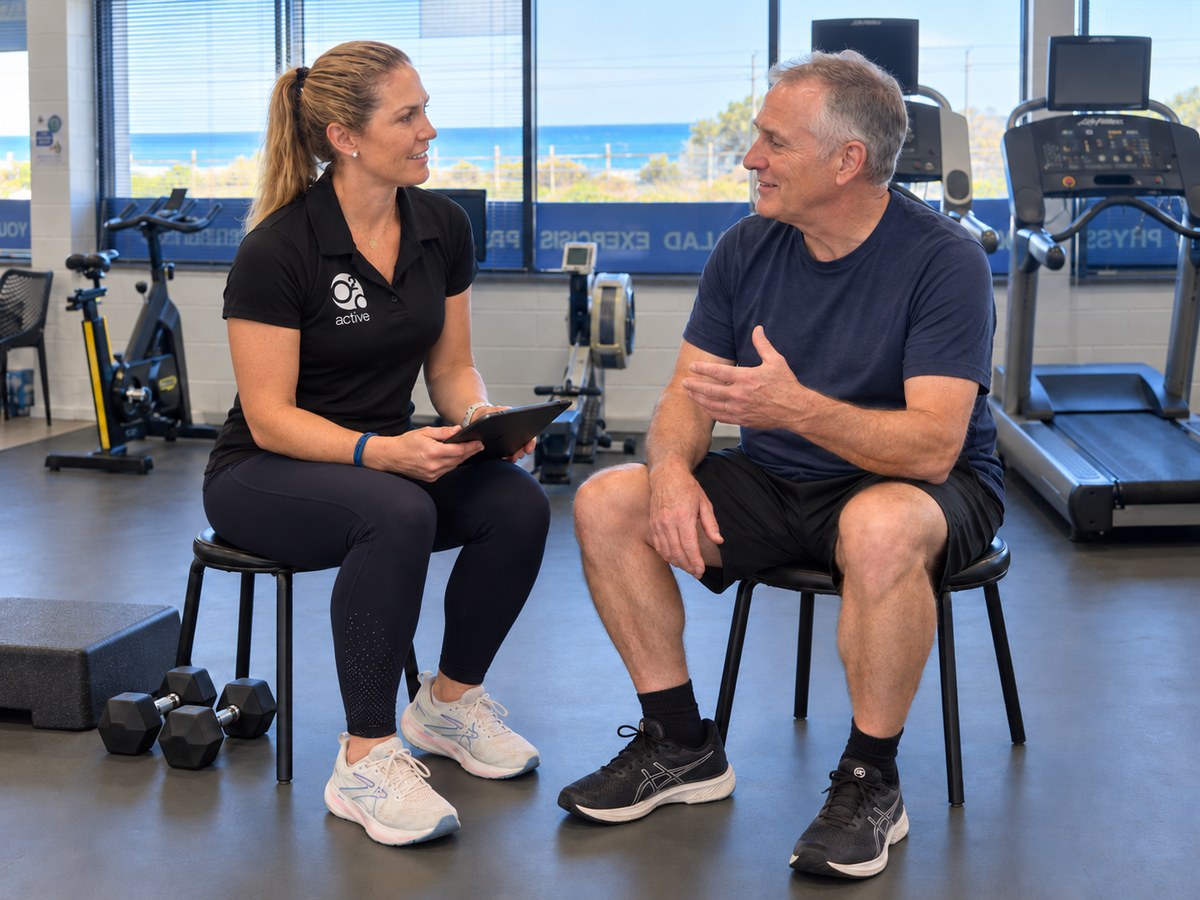
Every man starts with the same screen and the same baseline tests, so the plan is built on what your body is doing now rather than on averages. These are the measures we take first, and what they tell us.
Grip strength on a calibrated dynamometer, best of three each hand, plus predicted working loads for the push, pull, hinge and squat patterns from sub-maximal sets — never a true one-rep max. Grip below 27 kg is a sarcopenia flag for men.
InBody body composition gives an estimate of skeletal muscle mass by segment, so we can see whether the scales are hiding lost muscle. An appendicular lean mass index below 7.0 kg/m² combined with low strength meets the sarcopenia criteria we screen against.
Visceral fat area under 100 cm² is considered healthy; it is the body composition measure most closely linked to cardiometabolic risk and it accumulates with age. Seated blood pressure is recorded at every assessment (under 130/80 is optimal).
A graded, symptom-limited VO₂ Peak test on the bike or treadmill, with ECG monitoring for men over 50 or anyone with cardiovascular risk markers. Fitness is one of the strongest markers of long-term health we can measure, and it responds to training at any age.
Simple, well-normed tests that matter more each decade: 30-second sit-to-stand (men 60–64 should manage 14 or more), balance and walking speed. Over 75, these form a frailty screen.
Short validated questionnaires on sleep (Epworth, STOP-Bang), mood and stress (DASS-21) and activity (SIMPAQ) sit inside the assessment. A high sleepiness score is flagged to your GP for investigation; we do not diagnose sleep apnoea, but we build the program around it.
Metabolic testing (ECAL resting metabolic rate and resting fuel use, with InBody) is a separate specialist appointment. Blood tests, hormone investigations and diagnosis sit with your GP; we record and report, your doctor interprets.
Men tend to see their GP less often and present later for most of these. Exercise physiology does not replace your GP's care for any of them; it is the part of the plan that changes the numbers your GP is watching, delivered under supervision and reported back.
Cardiorespiratory fitness and visceral fat are measured, not assumed. Programs combine a measured aerobic target with strength work, with ECG-monitored testing for men over 50 or with risk markers, and a direct pathway into cardiac exercise physiology after an event or procedure.
Visceral fat, muscle mass and resting metabolic rate are tracked alongside the blood markers your GP orders. If your doctor has prescribed a GLP-1 medication, a significant share of the weight lost can come from muscle, so resistance training is dosed to protect it. See metabolic health.
Sarcopenia is screened with grip strength and appendicular lean mass against EWGSOP2 thresholds. Progressive resistance training is the treatment, prescribed from sub-maximal testing and re-tested at 12 weeks.
Persistent pain, old injuries and post-surgical rehab, including GLA:D for hip and knee osteoarthritis. Load is dosed to a pain rule (no more than 4/10, settling within 24 hours). See strength and rehabilitation.
Hormone therapy for prostate cancer is associated with loss of muscle and bone, and exercise is recommended as part of standard cancer care in Australia. Supervised resistance and aerobic training through and after treatment, including the Cancer Council WA Life Now program. See oncology rehabilitation.
Sleep and mood questionnaires sit inside the assessment, and a high sleepiness score is flagged to your GP for investigation. Regular supervised exercise is prescribed alongside your doctor's management of sleep apnoea, anxiety or depression, with the group setting doing some of the work on its own.
Osteoporosis is under-recognised in men and is often first picked up at a fracture. Bone-loading strength work, prescribed to your scan results and your doctor's care. See bone health.
Single-leg balance (eyes open and closed), timed up-and-go, gait speed and sit-to-stand are measured at assessment; over 75, or with any frailty marker, they form a formal frailty screen and testing is modified. A timed up-and-go under 10 seconds is normal; over 12 seconds is strongly associated with fall risk. Balance trains like any other quality — specific, progressive and supervised — alongside the strength that makes a stumble recoverable.
Stroke and TIA recovery (from 3 months after the event, with medical clearance), peripheral neuropathy and seizure disorders, programmed with your neurologist's or GP's management. Gait is analysed functionally — cadence, step length, symmetry — with no diagnosis made, and anything that suggests a neurological cause is referred to your doctor rather than trained through. Memory and thinking are your doctor's to assess; our programs build balance, coordination and reaction tasks into the training. See chronic condition management.
Untrained adults are built up on bodyweight and unloaded versions first, technique over 2 to 4 sessions, before any predicted working loads are tested. The aim is to train hard safely, not to find out what you can lift on day one.
A measured VO₂ Peak gives a fitness number you can train against. Fitness is one of the strongest markers of long-term health we can measure, and a higher level is associated with lower risk across the conditions above.
A men's strength class built around the two things that keep you moving for life: strength and mobility. You work through the fundamental movements — hinge, squat, push, pull and carry — build load progressively, and open up the hips, shoulders and thoracic spine that stiffen with age, desk work and years of training without enough stretching. An exercise physiologist runs every session and scales it to your level and any injury history.
The part men do not expect is the room. The group has become its own small community: blokes in their 50s, 60s and 70s who turn up for each other as much as for the training, notice when someone is missing, and talk about the stuff that does not get said elsewhere. For a lot of our members, the group is the reason they are still training a year or two on.
The class runs at North Fremantle. We prefer every new member to start with a 1:1 assessment so your class programming fits you; after that, the class intro offer applies — 2 weeks of unlimited classes for $88.
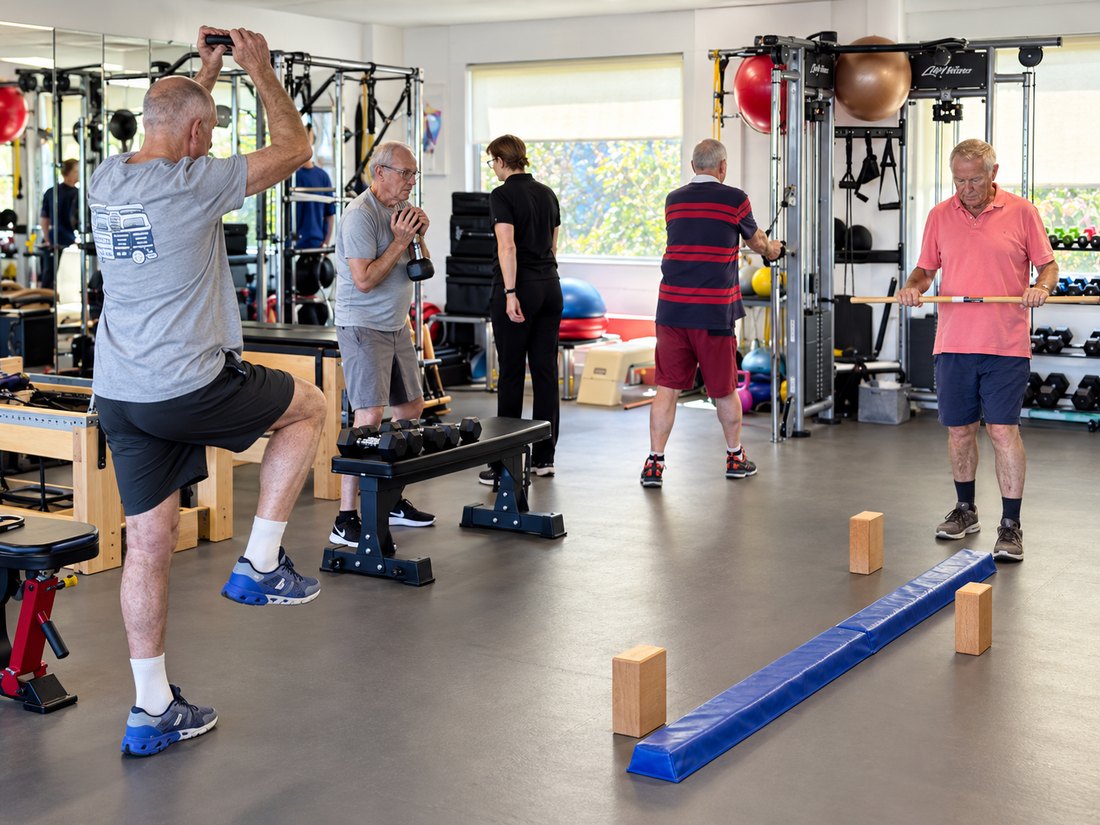
Pre-exercise screening (APSS and PAR-Q+), your history and goals, then the baseline tests above. Anything that needs medical clearance is sent to your GP before we load you.
Your numbers against the reference ranges, in plain English, with the two or three that matter most for you circled.
A program dosed to your results: compound lifts, a cardiorespiratory target you can measure, and mobility work where the screen showed you need it. Delivered 1:1, in EP Pairs, or in the men's class.
Re-test at 12 weeks. Strength, muscle mass, visceral fat, blood pressure and fitness are re-measured and reported back to your GP when a finding matters.
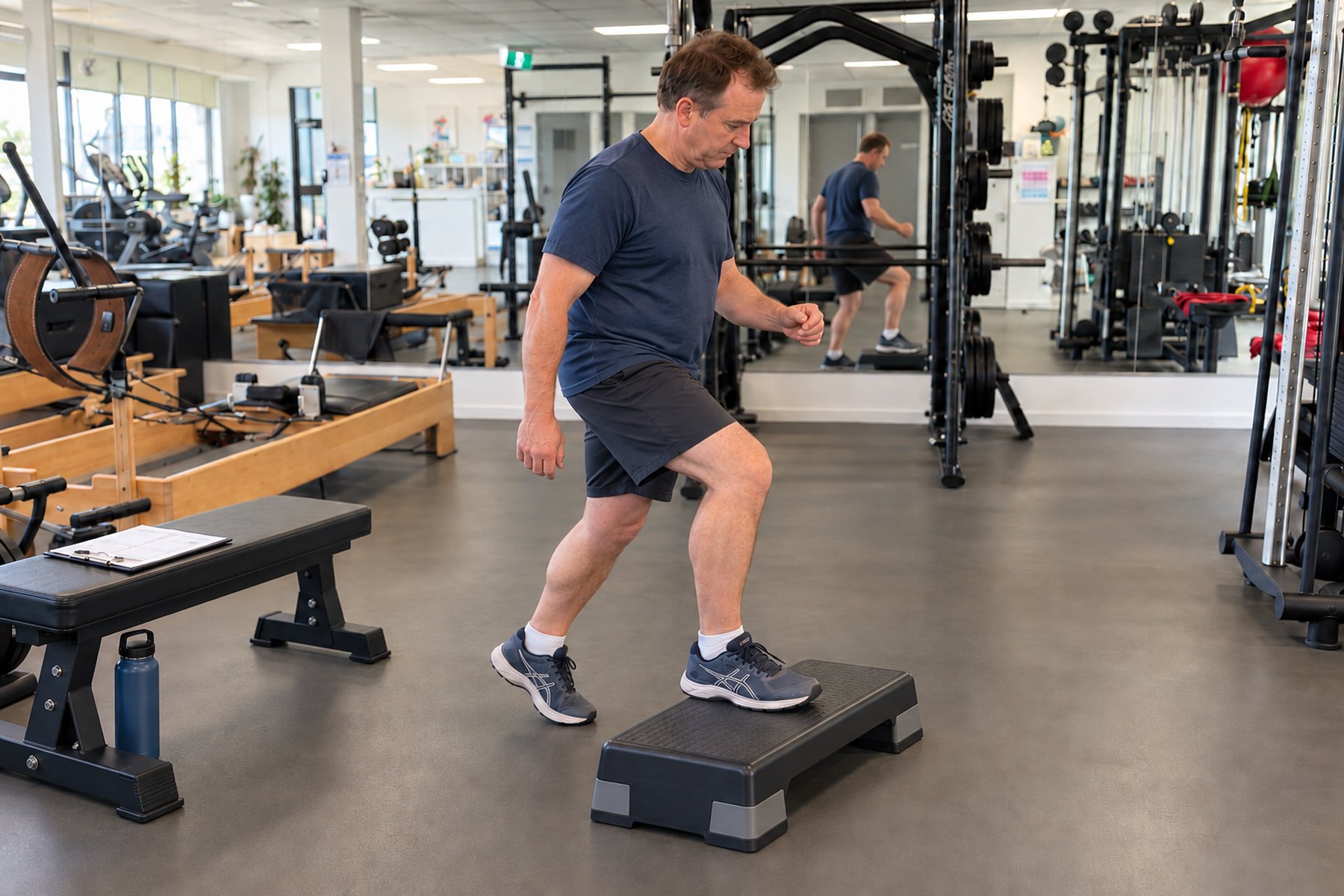
Prevention, pre-hab and rehabilitation after a cardiac event, with ECG-monitored testing.
Learn more → MetabolismResting metabolic rate, fuel use and body composition for weight, blood sugar and energy.
Learn more → RehabBack, shoulder, knee and post-surgical rehab built on force-plate and strength data.
Learn more → CancerSupervised exercise through and after treatment, including prostate and bowel cancer care.
Learn more →Men lose muscle, fitness and bone faster after 50 than most expect, and the decline is quiet until it is not: a fall, a cardiac event, a diagnosis. The measures above are the same ones used in longevity medicine because they predict how well you will function in your 70s and 80s, and all of them respond to training now.
If you want the complete picture — blood and hormone investigations, medical review and an integrated plan — longevity care starts with our partner Signal Health, where the medical lead and our performance lead work from the same results. The O2 Longevity Lab is the exercise physiology side of that program: the testing, the dosed training and the re-testing that turns a longevity plan into sustained action.
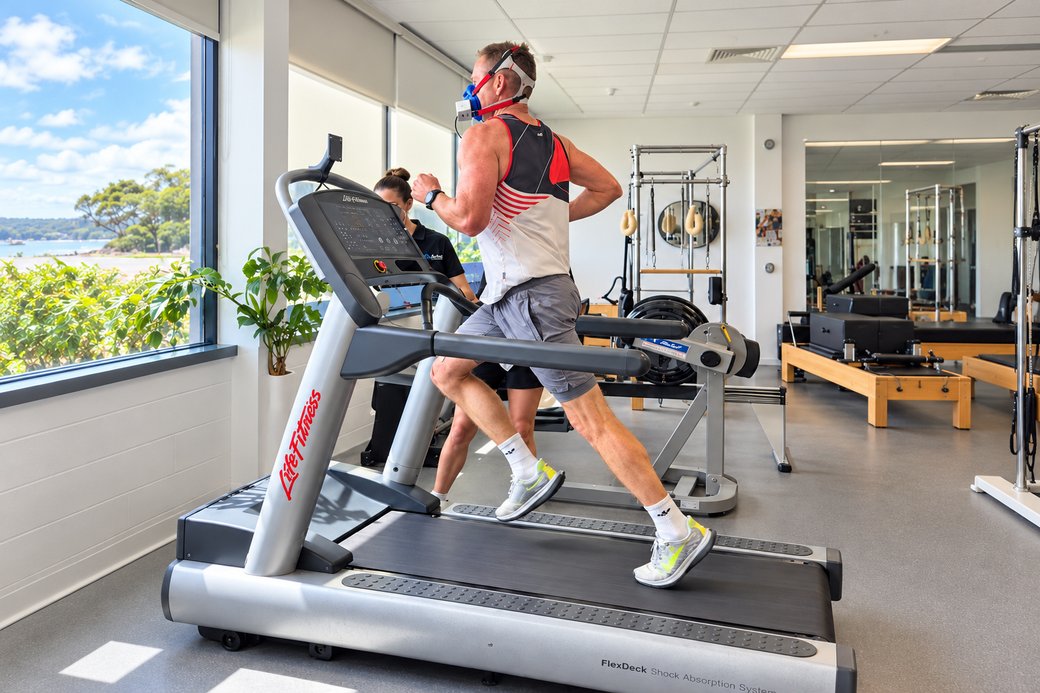
It starts with an Initial Assessment — Exercise Physiology, from $150 (around 60 minutes): your history and goals, the baseline tests above, and a plan explained in plain English. Metabolic testing (ECAL + InBody, $185) and VO₂ testing (from $250) are separate appointments. From there: 1:1 sessions with a senior EP, EP Pairs, or clinical classes including Men's Strength Club and Strength & Osteo; scheduled re-testing; and clinician-ready reporting to your GP or specialist when a finding matters. Medicare (with a GP Chronic Condition Management Plan), DVA and private health rebates may apply, depending on your circumstances.
Book an assessment, join the men's class, or refer a patient for objective baseline data.
