Properly prescribed, progressively loaded exercise is a strongly evidence-based part of managing osteoporosis alongside your doctor's care. Here is what that looks like in practice.
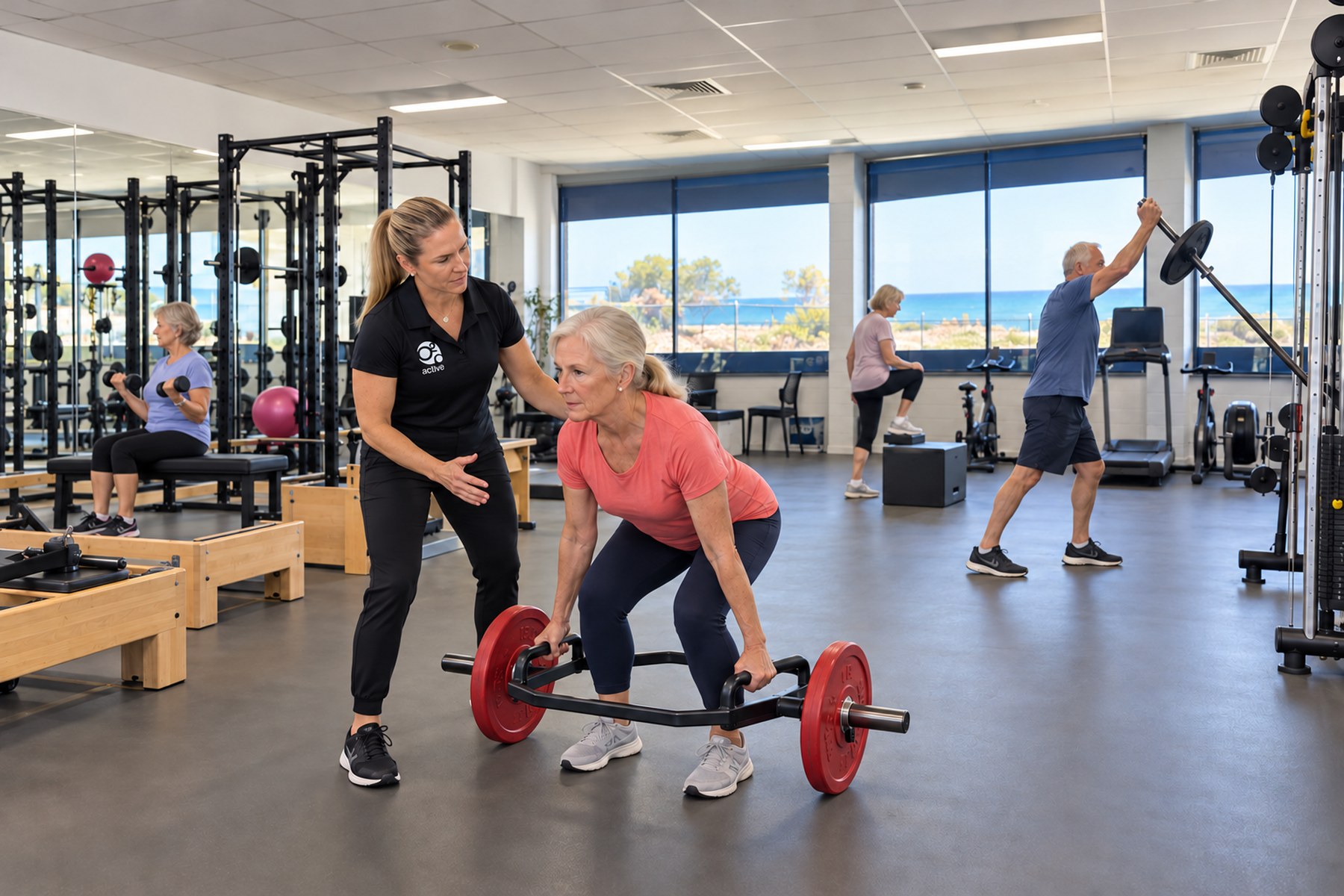
For a long time the advice for people with low bone density was to be careful. Walk, swim, avoid impact. The evidence now points the other way for most people: bone responds to load, and supervised, progressively loaded resistance and impact training is a strongly evidence-based part of managing osteopenia and osteoporosis alongside medication and your doctor's care.
The best known Australian trial, LIFTMOR, supervised postmenopausal women with low bone mass through twice-weekly, high-intensity resistance and impact training for eight months. The training group improved bone density at the spine and maintained it at the hip, and improved functional measures including back strength and posture, compared with a low-intensity home program. The trial measured bone density and function; it was not designed to measure fractures or falls, so we do not claim those.
The lifts in those programs are heavy by design, and the reason they were safe was supervision: technique first, loads built in small steps, and lifts modified for anyone with a history of vertebral fracture. That is exactly how we run Strength & Osteo at North Fremantle and at the Movement Studio in Swanbourne. Everyone starts with an Initial Assessment that records your scan results, strength and balance baseline, and any conditions that change the prescription. Level 1 builds the hinge, squat, push, pull and balance patterns; Levels 2 and 3 add load and impact at evidence-based intensities, with an exercise physiologist on the floor.
Strength, balance, sit-to-stand and gait are re-tested at 12 weeks and reported to your GP or specialist. Bone density itself is measured by DEXA through your doctor, usually on a one to two year cycle. If your scan changes your prescription, your program changes with it.
Source: Watson et al., Journal of Bone and Mineral Research, 2018 (LIFTMOR). Exercise is prescribed alongside, not instead of, your doctor's care. Individual results vary.
