A seated blood pressure reading is the first measurement of every assessment, and it sets the rules for everything that follows. Here is how we use it, and the numbers that change the plan.
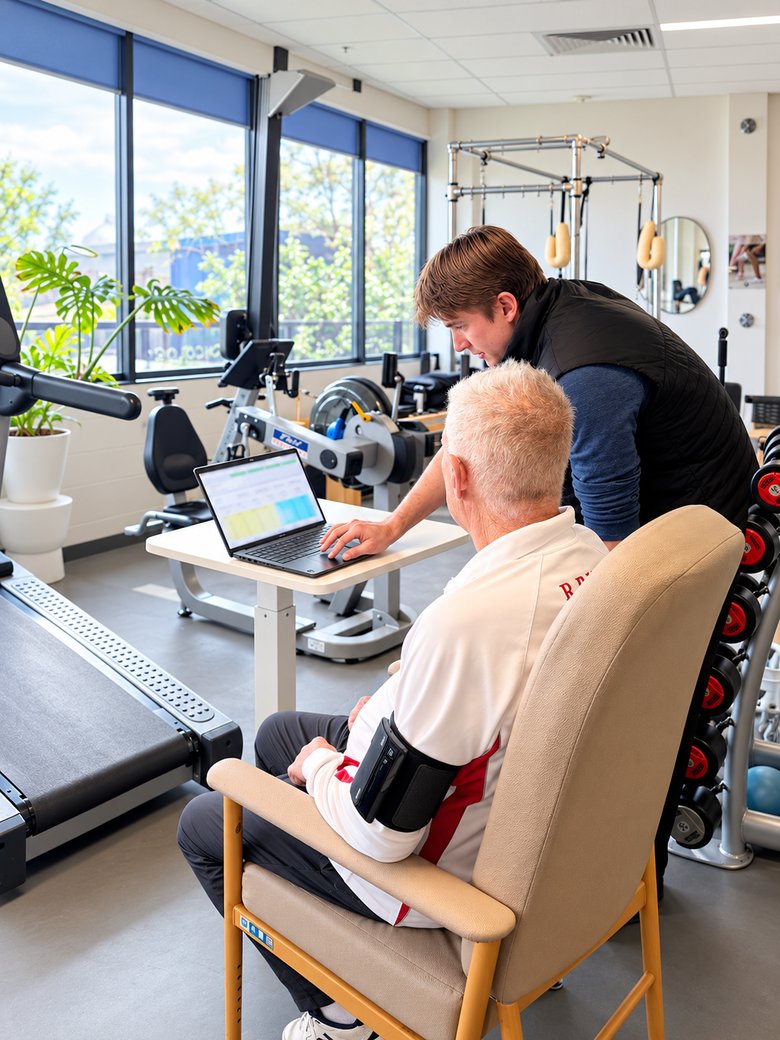
Before anyone at O2 Active steps onto a treadmill or picks up a bar, we take a seated blood pressure after 5 minutes of rest. It is a simple reading with large consequences, because the result decides which tests can go ahead that day, which need your doctor's clearance first, and how hard we are allowed to push.
Under 130 over 80 is the optimal reading we reference. Controlled high blood pressure on medication is an amber flag: we proceed with monitoring, use sub-maximal effort and symptom-limited protocols rather than all-out tests, avoid breath-holding on heavy lifts, and leave out overhead lifting if the systolic reading is above 160. Above 180 systolic or 110 diastolic at rest is a stop. We do not test, we rebook, and we let your GP know the reading, because uncontrolled blood pressure is one of the conditions that excludes performance testing until it is managed.
Blood pressure medicines change how your body responds to exercise, so we record every one of them on every test record. ACE inhibitors and the related angiotensin blockers can exaggerate the drop in blood pressure after exercise, so we extend your cool-down and watch you for longer. Calcium channel blockers can reduce the blood pressure response to effort. Diuretics change your fluid status, which changes both blood pressure and heart rate on the day. Beta blockers blunt heart rate altogether, which is a story of its own and the subject of our next article. None of this stops you training; it changes how we measure you and how we progress you.
For cardiac and hypertension programs we record blood pressure at rest, during exercise and in recovery, and the pattern across those three points is what your exercise physiologist reports. A reading that climbs steeply, fails to settle in recovery, or drops too far after a session is a finding we send to your doctor the same day. Testing for adults over 50, or anyone with cardiovascular risk markers, runs with ECG monitoring. We record and report; your doctor interprets and diagnoses.
Regular aerobic and resistance exercise is a standard part of managing high blood pressure alongside your GP's care, and it is prescribed, not improvised: a measured aerobic target from your fitness test, strength work dosed to avoid breath-holding and straining, and a re-test at 12 weeks that includes your resting reading. Programs run 1:1, in EP Pairs or in supervised classes at North Fremantle and Swanbourne, and for Wheatbelt clients from the Wheatbelt Health Network in Northam.
Thresholds and medication rules from the O2 Active clinical manual, pre-test screening framework. Blood pressure management and medication decisions sit with your GP. Individual results vary.
