Beta blockers hold your heart rate down on purpose, which makes every heart rate based fitness formula wrong. Here is how we test and prescribe for you instead.
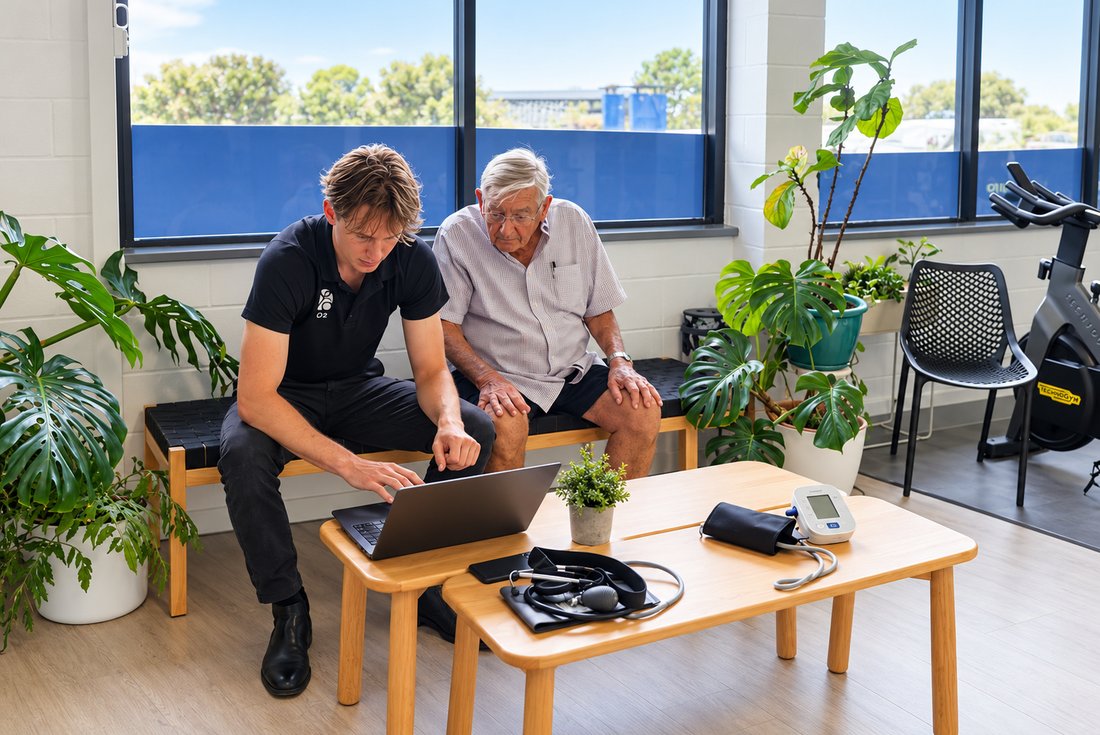
If you take a beta blocker, you have probably noticed that your heart rate stays low even when you are working hard. That is the medication doing its job. It is also why the heart rate zones on a fitness watch, the age-predicted maximum your gym once gave you, and any fitness estimate built on heart rate do not apply to you. At O2 Active we treat a beta blocker as a change to the whole testing method, not a footnote.
Any test that predicts fitness from heart rate is invalid on a beta blocker, so we do not use them. Instead we run a symptom-limited VO₂ Peak test, measuring the oxygen you use directly, and we set the end point from your rating of perceived exertion and your ventilatory threshold, the point where your breathing changes gear, rather than from a heart rate target. A true all-out VO₂ Max is not appropriate; a peak test is. The beta blocker is documented on every test record so that your results are only ever compared with results taken under the same conditions.
Your training intensity is prescribed by effort and by the ventilatory threshold from your test, not by heart rate. In practice that means you learn to work to a rating of perceived exertion that your exercise physiologist sets from your test result, and they use your breathing and your talk test on the floor to keep you in range. Heart rate is still recorded, because it is useful as a trend under the same medication, but it never sets the target.
Beta blockers are the clearest example, but the medication list you fill in before your assessment shapes a lot of the plan. Blood pressure medicines change how we monitor your recovery. Statins can cause muscle pain in a minority of people, so we document any soreness before strength testing to separate it from normal training soreness. If a medication changes, your test conditions change, and we note the date so your re-test is read fairly.
Most of the people we see on beta blockers are in our cardiac exercise physiology program after a cardiac event or procedure, or managing blood pressure, arrhythmia or heart failure with their GP or cardiologist. Testing runs with ECG monitoring at North Fremantle, your clinician records and reports, and your doctor interprets. Your program then runs 1:1, in EP Pairs or in a supervised class, with a re-test at 12 weeks under the same medication conditions as the first.
Testing rules from the O2 Active clinical manual medication table and cardiorespiratory protocols. This article describes how we test and prescribe; it says nothing about whether a medication works, which is a conversation for you and your doctor. Individual results vary.
